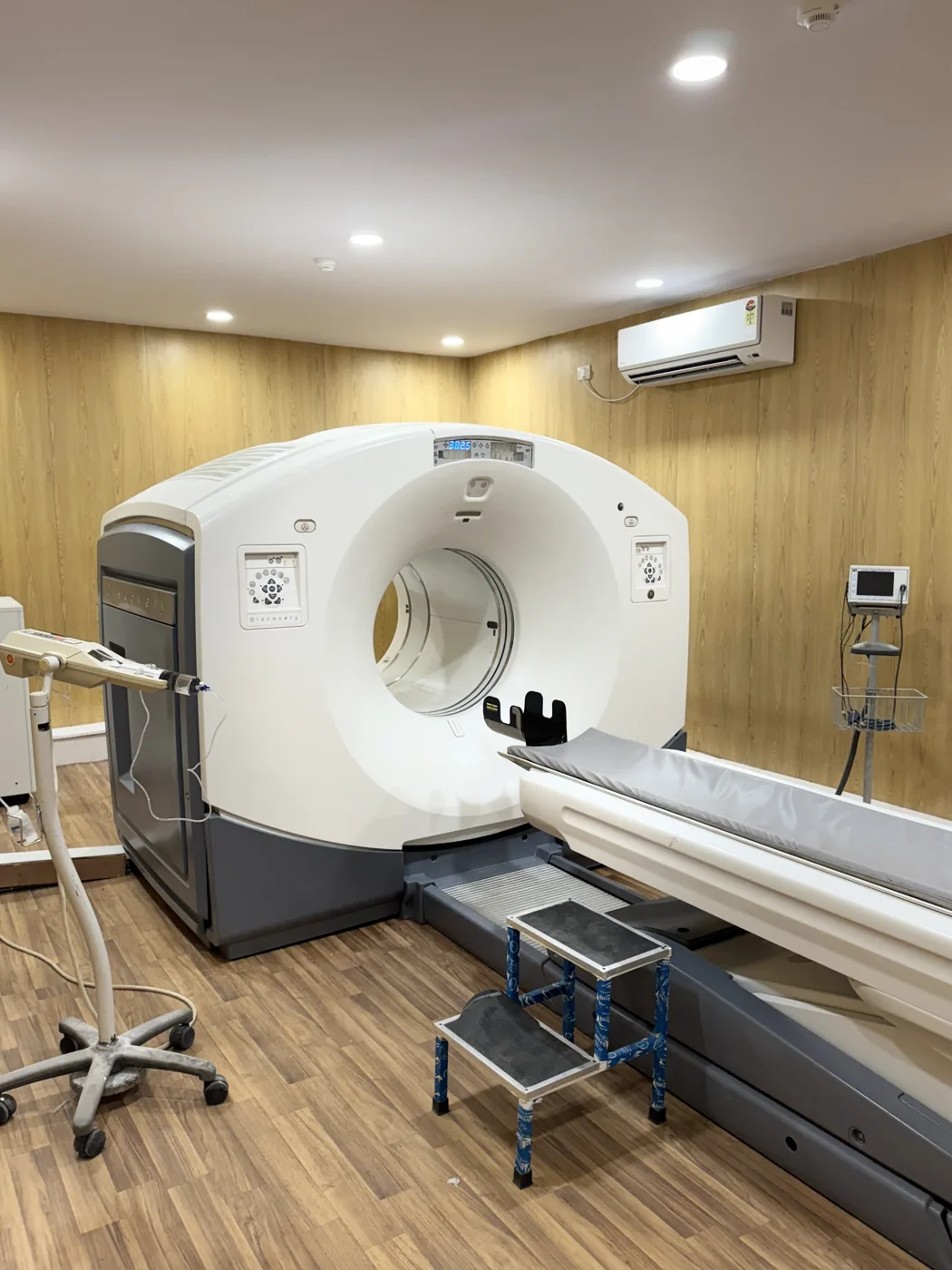
Different diseases require different radiopharmaceuticals. Your nuclear medicine specialist or oncologist will prescribe the right tracer. Here's a quick guide.
🟠
FDG (Fluorodeoxyglucose)
The most common PET tracer. Detects metabolically active cancer cells. Used for staging lymphoma, lung, breast, colorectal, cervical, and head & neck cancers.
🔵
PSMA (Ga-68 / F-18)
Specifically targets prostate-specific membrane antigen. Gold standard for prostate cancer staging and detecting biochemical recurrence even at very low PSA levels.
🟢
DOPA (F-18)
Used for Parkinson's disease, movement disorders, and neuroendocrine tumours such as phaeochromocytoma, paraganglioma, and paediatric brain tumours.
🟡
Choline (F-18 / C-11)
Used for prostate cancer recurrence detection (especially at low PSA) and hepatocellular carcinoma where FDG may give false negatives.
🔴
DOTANOC / DOTATATE (Ga-68)
Targets somatostatin receptors. Used for staging and follow-up of neuroendocrine tumours (NETs) including carcinoid, gastrinoma, and insulinoma.
⚪
NaF & Other Bone Tracers
Sodium Fluoride PET CT provides highly sensitive bone metastasis detection — superior to conventional bone scan — for prostate, breast, and lung cancers.
Clinical Applications
When is a PET CT Scan Recommended?
PET CT combines metabolic and anatomical imaging to detect disease at a cellular level — often far earlier than CT or MRI alone. Here are the most common clinical situations where your doctor may recommend a PET CT scan.
🎗️
Cancer Staging
Precise staging of lung, breast, colorectal, lymphoma, cervical, and head & neck cancers before treatment planning.
🔄
Treatment Response
Evaluate how well chemotherapy or radiation therapy is working — mid-treatment or post-treatment assessment.
🔍
Cancer Recurrence
Detect recurrence of cancer in patients who have previously undergone surgery, radiation, or chemotherapy.
❤️
Cardiac Assessment
Assess myocardial viability in patients with ischaemic heart disease before bypass surgery or angioplasty.
🧠
Neurological Disorders
Evaluate epilepsy foci, Alzheimer's disease, Parkinson's, and other neurodegenerative conditions.
🩺
Unknown Primary
Identify the primary tumour site when metastatic disease is detected but origin is unknown on conventional imaging.
What to Expect
PET CT Scan Process at Adhiraj Imaging
From booking to report — here's exactly what happens when you come to us.
1
Book Your Appointment
Call or WhatsApp us on 9953-143-636. Share your doctor's prescription and we'll confirm the scan date, time, and preparation instructions within minutes.
2
Pre-Scan Preparation
Fast for 6 hours before the scan (water allowed). Avoid strenuous exercise 24 hours prior. Diabetic patients must inform us in advance. Wear comfortable, loose clothing.
3
FDG Injection & Uptake Period
On arrival, a small amount of radioactive glucose (FDG) is injected intravenously. You rest quietly for 60 minutes while the tracer is absorbed by metabolically active cells.
4
PET CT Scanning
You lie comfortably on the scanner table. The scan takes 20–30 minutes. Our technologists ensure your safety and comfort throughout the procedure.
5
Report by Expert MD Nuclear Medicine Doctor
Your scan is interpreted by our Expert MD Nuclear Medicine Doctors. The detailed report is delivered on the same day or within 24 hours — directly on WhatsApp.
Serving Patients From
PET CT Scan Near Me — East Delhi & Surrounding Areas
Patients travel to Adhiraj Imaging, Dilshad Garden for PET CT scans from across East Delhi and NCR. We are easily accessible from: