MRI Scan, CT Scan & PET-CT Scan – Complete Guide to Advanced Diagnostic Imaging
Introduction: Why Advanced Scans Matter Today
In modern healthcare, early detection is the key to better outcomes — and that’s exactly what advanced imaging techniques like MRI, CT Scan, and PET-CT Scan help achieve. Each scan provides unique and critical insights into the body’s structure, function, and disease activity.
If you’ve ever wondered which scan is right for you or why your doctor recommended a specific test, this guide breaks it down in a simple, clear way.
What Is an MRI Scan?
Magnetic Resonance Imaging (MRI)
An MRI scan uses powerful magnets and radio waves to create highly detailed images of organs, tissues, and the nervous system — all without radiation.
What MRI Detects
-
Brain and neurological disorders
-
Tumors and cysts
-
Spine issues (disc problems, nerve compression)
-
Joint injuries
-
Pelvic & abdominal abnormalities
-
Soft tissue damage
Why Doctors Recommend MRI
Because MRI provides high-resolution soft-tissue images, it helps detect conditions that other scans may miss.
Benefits
-
No radiation
-
Extremely detailed imaging
-
Ideal for brain, spine, joints & soft tissues
What Is a CT Scan?
Computed Tomography (CT Scan)
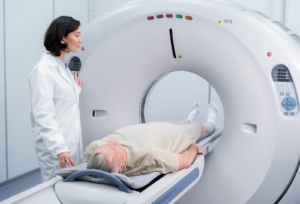
A CT scan uses X-rays and computer processing to create cross-sectional images of the body, offering a fast and accurate overview of internal structures.
What CT Detects
-
Bone fractures
-
Internal injuries
-
Lung infections (pneumonia, COVID, TB)
-
Kidney stones
-
Tumors
-
Heart & vascular diseases
Why Doctors Recommend CT
CT scans are fast, reliable, and excellent for emergencies, making them ideal for trauma, stroke, and acute medical conditions.
Benefits
-
Quick results
-
Excellent for bones & lungs
-
Ideal for emergency diagnosis
What Is a PET-CT Scan?
Positron Emission Tomography – Computed Tomography
A PET-CT scan combines metabolic imaging (PET) with structural imaging (CT) to show how organs and tissues are functioning — not just what they look like.
What PET-CT Detects
-
Cancer of any type
-
Metastasis (spread of cancer)
-
Heart diseases
-
Neurological disorders
-
Organ dysfunction
Why Doctors Recommend PET-CT
PET-CT is a gold standard scan for cancer detection and treatment planning because it shows:
-
Tumor size
-
Activity
-
Spread
-
Response to treatment
Benefits
-
Detects cancer early
-
Helps monitor treatment progress
-
Provides functional + structural imaging
MRI vs CT Scan vs PET-CT: What’s the Difference?
| Feature | MRI | CT Scan | PET-CT Scan |
|---|---|---|---|
| Uses Radiation | ❌ No | ✔ Yes | ✔ Yes (low dose) |
| Best For | Brain, spine, joints, soft tissues | Lungs, bones, trauma | Cancer, organ function |
| Speed | Moderate | Fast | Moderate |
| Detail Level | High soft-tissue detail | High bone/lung detail | High metabolic detail |
Each scan has its own purpose — and doctors choose based on symptoms, disease type, and required detail.
When You May Need an MRI, CT, or PET-CT Scan
MRI Recommended For:
-
Headaches, seizures
-
Stroke evaluation
-
Back pain & disc disease
-
Joint injuries
-
Pelvic or abdominal pain
CT Scan Recommended For:
-
Chest infections
-
Kidney stones
-
Trauma or accidents
-
Severe headaches
-
Abdominal injuries
PET-CT Recommended For:
-
Detecting cancer
-
Staging tumors
-
Monitoring chemotherapy
-
Finding infections
-
Brain function analysis
Benefits of Modern Diagnostic Imaging
Today’s advanced scanners offer:
-
Faster scans
-
Sharper imaging clarity
-
Reduced radiation exposure
-
Early disease detection
-
Better treatment planning
-
High-accuracy reporting
Whether it’s an MRI, CT, or PET-CT, advanced imaging helps doctors make confident decisions and prevents complications.
Preparation Tips for Each Scan
MRI Preparation
-
Remove metal objects
-
Inform about pregnancy
-
If claustrophobic, ask for guidance or mild sedation
CT Scan Preparation
-
Some scans require fasting
-
Contrast dye may be used
-
Inform if allergic to iodine
PET-CT Preparation
-
Fasting required
-
Avoid heavy exercise 24 hours before
-
Diabetic patients must follow specific instructions
Conclusion
MRI, CT, and PET-CT scans play a crucial role in detecting diseases early, guiding treatment, and improving patient outcomes. Understanding the difference between these scans helps you feel more confident and prepared when your doctor recommends one.
Advanced diagnostic centers with modern technology and experienced radiologists ensure that every scan is accurate, comfortable, and trustworthy.
Frequently Asked Questions (FAQs)
1. Which scan is best for detecting cancer?
A PET-CT scan is the most accurate for detecting cancer, monitoring spread, and evaluating treatment response.
2. Is MRI better than CT scan?
Both are effective — MRI is better for soft tissues, while CT is better for bones and lungs.
3. Does an MRI scan use radiation?
No. MRI uses magnetic fields and is completely radiation-free.
4. Is PET-CT painful?
No, it is painless. A small injection of radioactive tracer is used.
5. How long does each scan take?
-
MRI: 20–45 mins
-
CT: 5–10 mins
-
PET-CT: 2–3 hours (due to tracer uptake time)